Recently, the research team led by Xu Chunxiang and Zu Shuai from the School of Electronic Science and Engineering, Southeast University, have theoretically demonstrated a new approach for constructing and regulating spatiotemporally localized superchiral fields at the nanometer–femtosecond scale using a single plasmonic nanoantenna with fourfold rotational symmetry (C4). The related research results were published inACS Photonics, with Southeast University as the sole affiliation. This work is supported by the National Natural Science Foundation of China, the Natural Science Foundation of Jiangsu Province in China and the Start-up Research Fund of Southeast University.
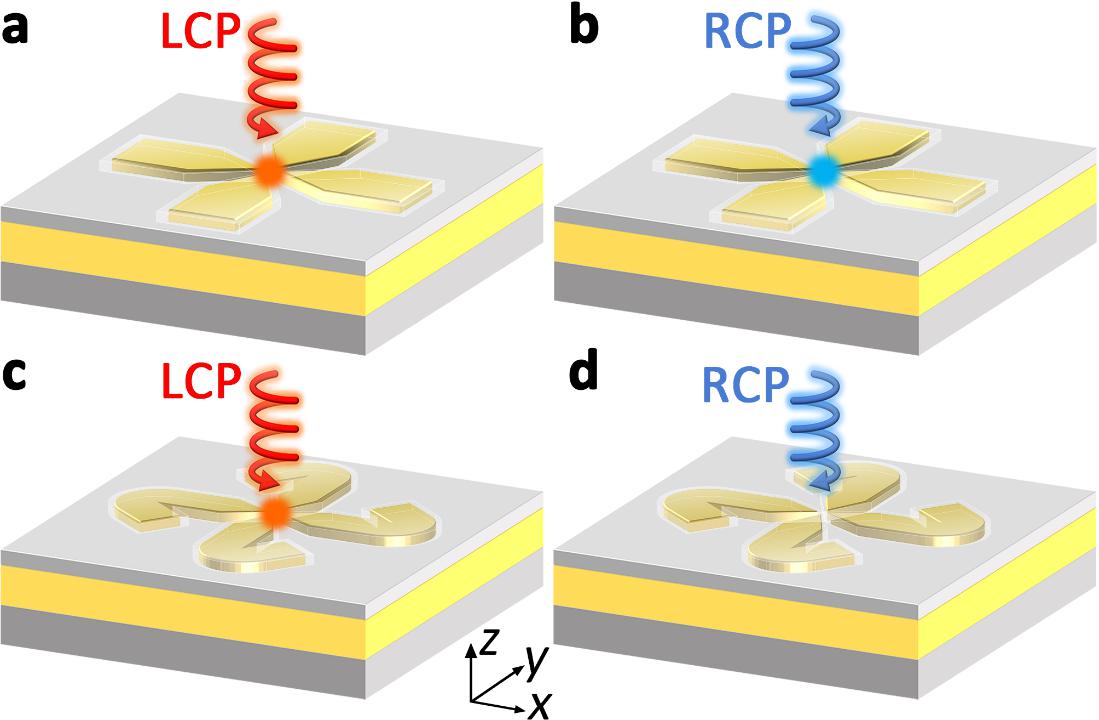
Figure 1. Schematic of rotationally symmetric achiral and chiral Au nanostructures under normally incident circularly polarized light excitations.
An ultraconfined photonic environment capable of supporting chiral light–matter interactions in both space and time is highly desirable for nano-optical and quantum-optical applications at extremely small space and time scales. To address this need, the researchers designed two types of C4-symmetric plasmonic nanoantennas: an achiral cross-shaped structure and a chiral windmill-shaped structure.
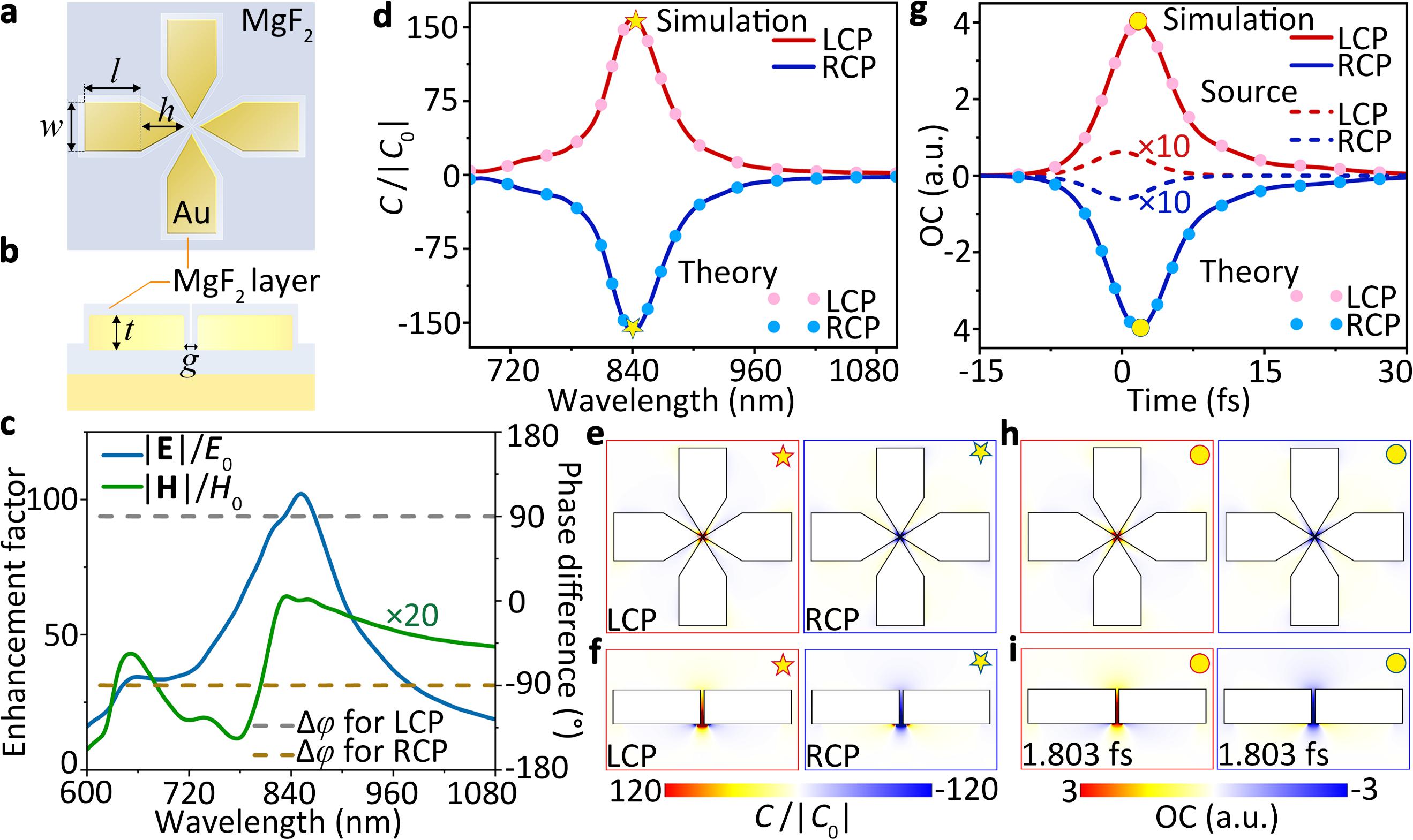
Figure 2. Chiroptical response of achiral cross-shaped Au nanoantenna in the space–wavelength and space–time domains.
The C4 rotational symmetry establishes specific rotational relationships and phase correlations between the electric and magnetic fields at the center of the nanoantennas. Under normally incident ultrashort circularly polarized laser excitation, these nanostructures generate highly localized superchiral fields with nanoscale spatial confinement and femtosecond temporal resolution.
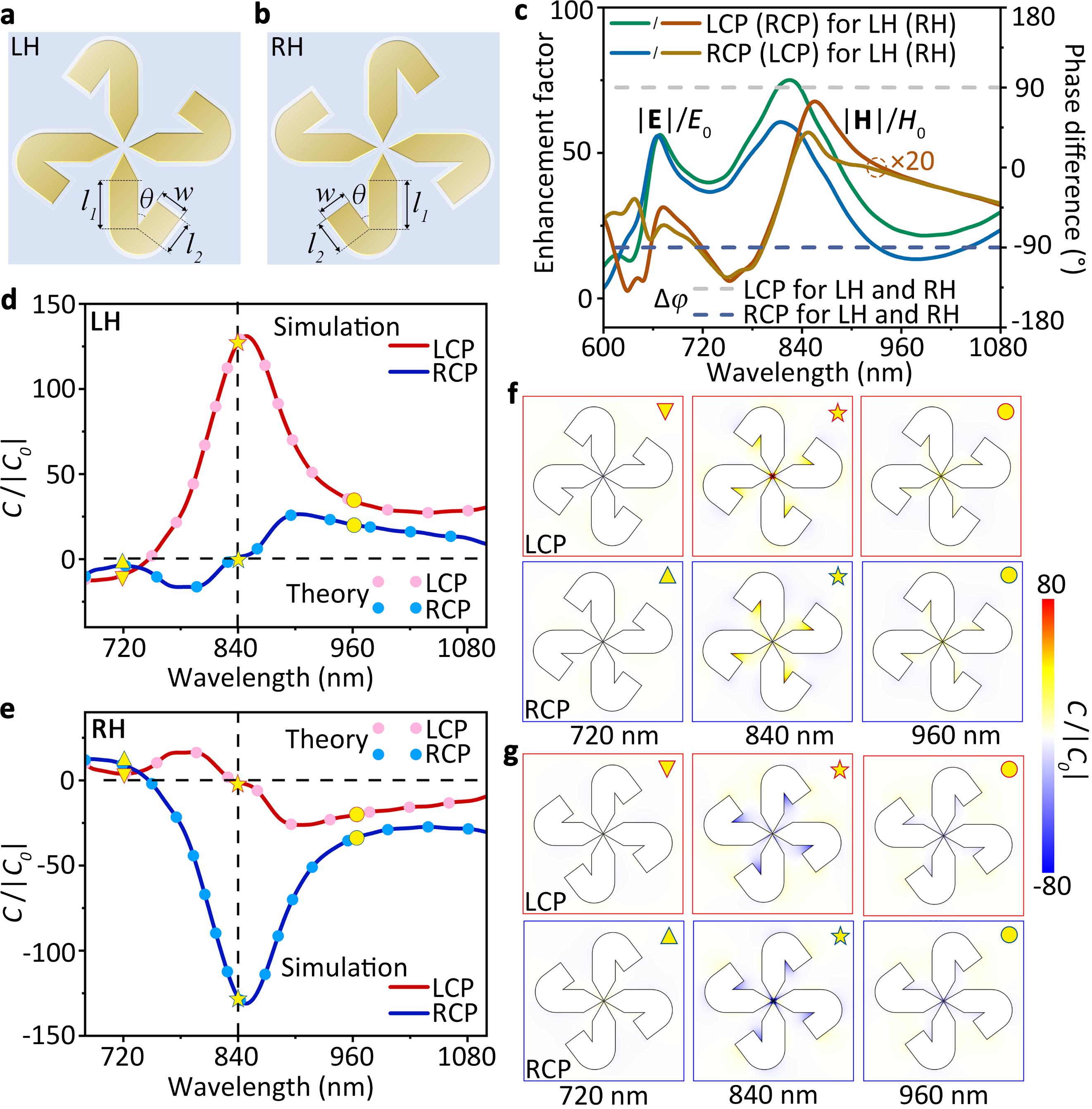
Figure 3. Chiroptical response of chiral windmill-shaped Au nanoantenna in the space–wavelength domain.
The two nanoantenna designs provide different forms of control over the resulting optical chirality. The achiral cross-shaped structure enables regulation of the sign of the optical chirality, while the chiral windmill-shaped structure allows simultaneous control of both the intensity and sign of the optical chirality. These capabilities arise from the engineered coupling between plasmonic modes and can be controlled across the spatial, frequency and time domains.
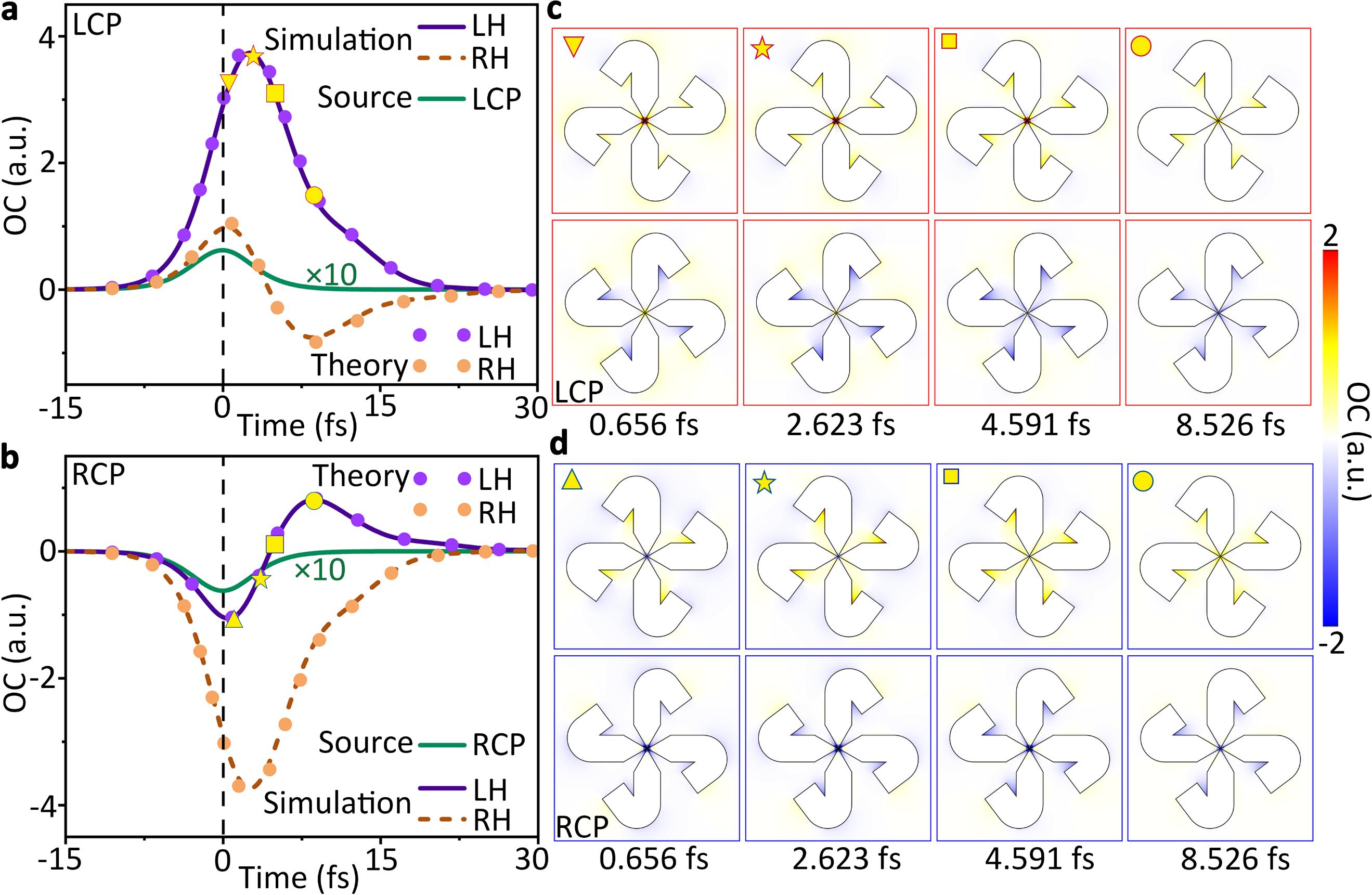
Figure 4. Chiroptical response of chiral windmill-shaped Au nanoantenna in the space–time domain.
The researchers further introduced an interferometric pump–probe method to dynamically manipulate the superchiral fields. By varying the time delay between the pump and probe pulses, the response of the superchiral fields can be continuously tuned and switched on or off on a sub-femtosecond timescale.
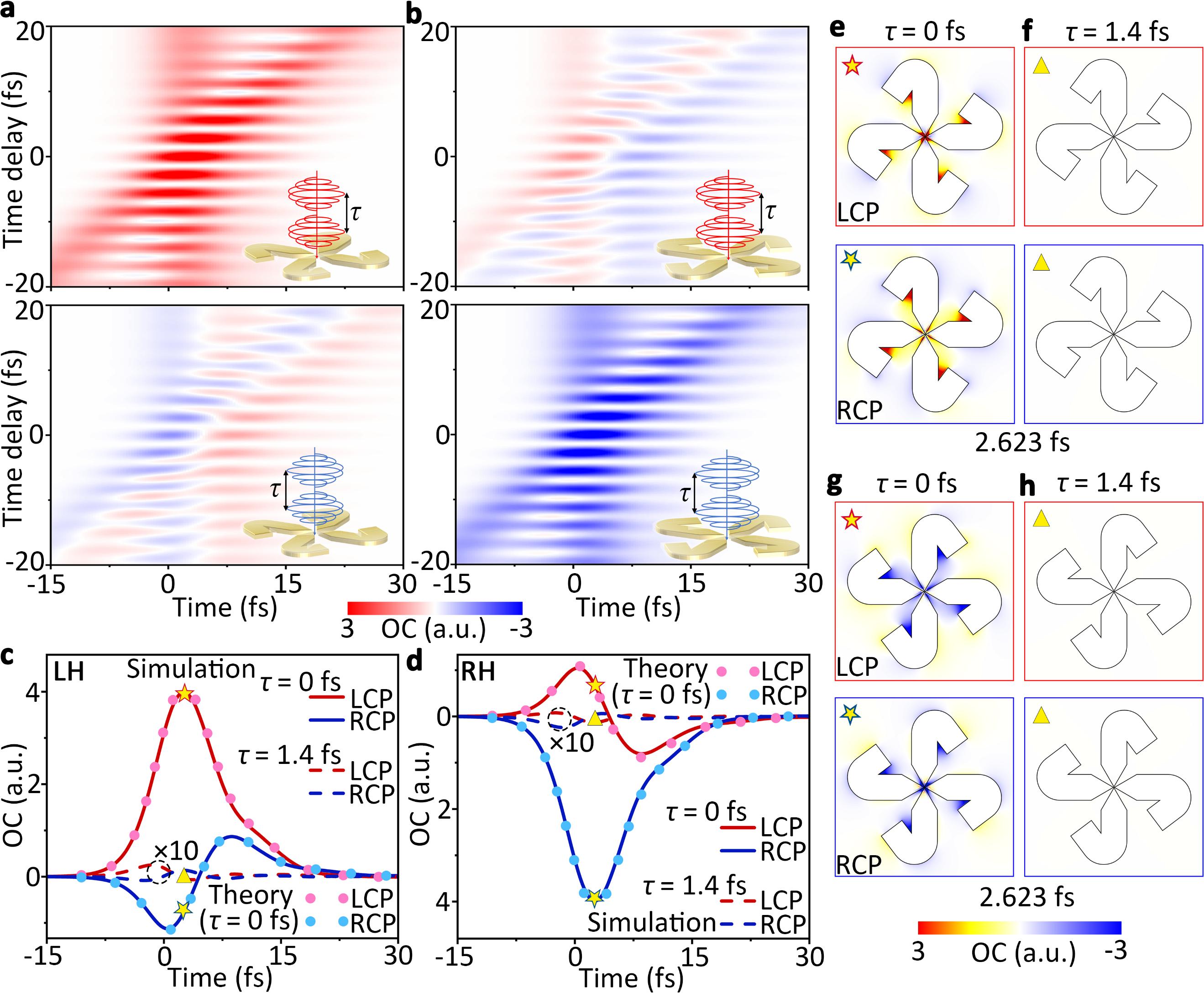
Figure 5. Nanometer−femtosecond-scale manipulation of spatiotemporally localized superchiral fields in chiral windmill-shaped Au nanoantennas by using interferometric pump-probe method.
This work offers a new strategy for manipulating superchiral fields and their interactions with matter. It may promote the development of ultrafast nanoscale and quantum chiroptical spectroscopy, as well as integrated nanophotonic devices.
Paper Link: //doi.org/10.1021/acsphotonics.6c00750